- The Luxury Playbook Weekly Round-up
- Posts
- Weekly Round-up

Agenda
Spotlight
Fine Assets
Real Estate
Equities

Hermès Handbags Have Quietly Become Better Investments Than Gold
For decades, Hermès Birkin bags have quietly behaved less like fashion accessories and more like a peculiar, high-performing asset class that’s made serious investors take notice.
Analysis of secondary market prices by luxury platform Baghunter found that Birkin bags appreciated by about 14.2% per year between 1980 and 2015, while the S&P 500 delivered roughly 8% to 10% annually over similar periods and gold managed only around 2% to 3%.
The numbers get even more striking when you look at current pricing dynamics. A Birkin 30 in Togo leather typically retails for about $12,000 to $15,000 in Hermès boutiques, depending on country, color, and hardware. Yet according to CNBC data, the very same bag can easily command $30,000 or more on the resale market.
In other words, a buyer can walk out of the boutique with an object that’s already trading at a substantial premium to what they just paid, a phenomenon almost unheard of outside distressed luxury goods or deliberately manipulated markets.
What makes this particularly interesting from an investment perspective is that a sizable slice of owners now treat these bags as pure financial instruments. Firestein estimates that around 25% of Birkin buyers never carry the bag at all, instead keeping it in climate-controlled storage purely as an investment, while the remaining 75% actually use theirs.
When a quarter of your market consists of people who never even touch the product and treat it exactly like they’d treat gold bars in a vault, you’re watching an asset class emerge rather than just a luxury goods category.

Capital Floods Chinese Art Market But Prices Have Lost Touch With Reality
Chinese contemporary art is enjoying a moment of extraordinary spending power combined with equally extraordinary structural fragility that should concern anyone treating it as an investment rather than pure consumption.
According to the Art Basel & UBS Survey of Global Collecting 2025, high-net-worth collectors worldwide now allocate an average 20% of their wealth to art, up from 15% in 2024. Within that global shift, Chinese mainland collectors have emerged as the world’s biggest art spenders, allocating an average of $2.2 million per year to art and antiques.
The concentration of spending power has become even more pronounced within specific demographic segments. Chinese HNW collectors now dedicate approximately 20% of their wealth to art, mirroring or exceeding the global average.
But the price structure of mainland contemporary art often looks completely disconnected from international comparables in ways that suggest speculation rather than value discovery.
“Drink Less, But Better” Is The New Normal In The Wine Market
The global wine industry faces a striking paradox that’s rewriting the rules for investors and collectors alike. While consumption has fallen to levels not seen since the 1960s, premium bottle sales and average spending per purchase continue climbing to new heights.
Health consciousness and wellness culture have moved from fringe concerns to mainstream priorities, reshaping drinking habits across demographics. Younger generations treat wine as an occasional premium experience rather than a daily ritual, fundamentally altering demand patterns that sustained the industry’s growth for decades.
The phrase “drink less, but better” has emerged as the industry’s shorthand for this shift, capturing a seismic restructuring where business models built on volume sales face extinction while premium producers with compelling stories thrive despite shrinking overall demand.
For anyone holding wine as an investment or building a collection with an eye toward future value, this transformation demands a complete rethinking of what qualifies as an attractive asset. The strategies that worked reliably for decades, buying established regions, holding blue-chip producers, riding the wave of steadily growing global consumption, no longer guarantee returns in a world where fewer people drink wine but those who do spend far more per bottle.
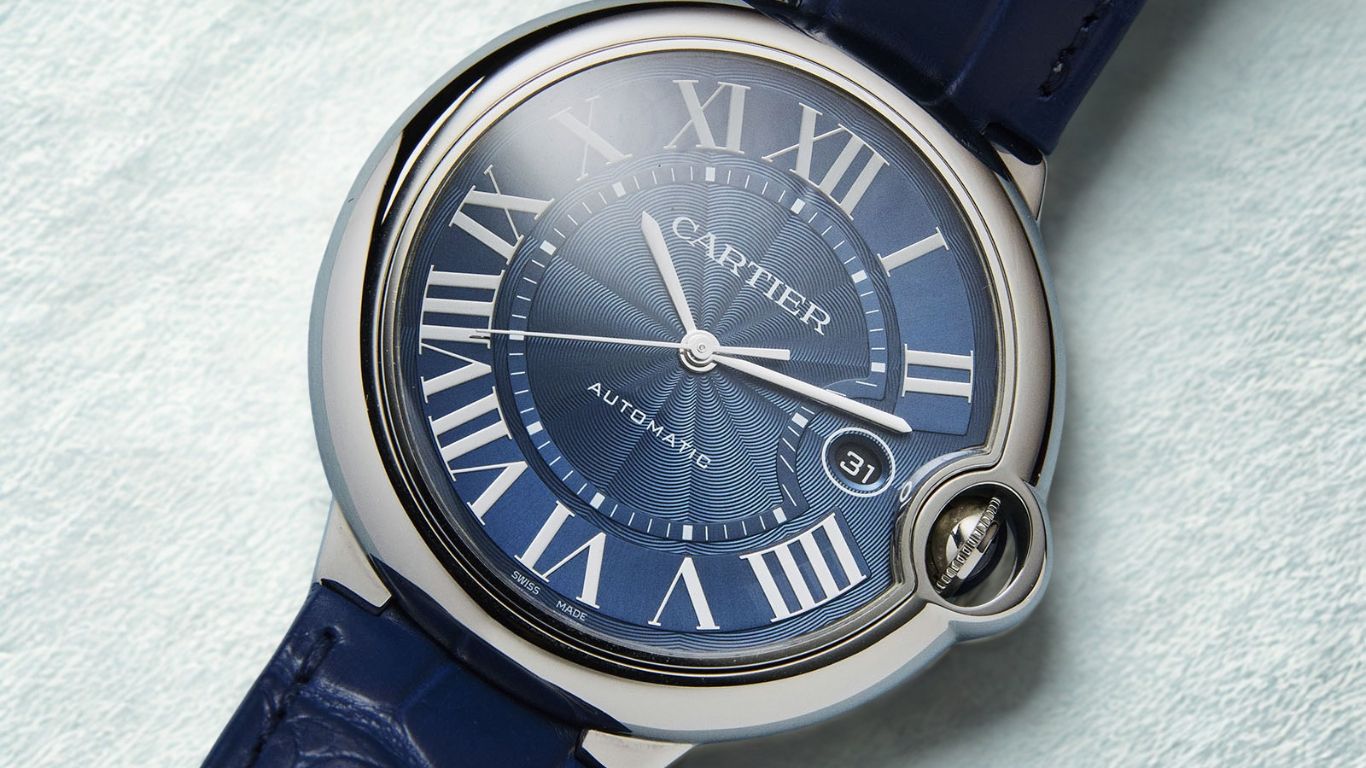
The Ballon Bleu Made Cartier Famous But Won’t Make You Money
The Cartier Ballon Bleu stands as one of modern watchmaking’s most recognizable designs, launched in 2007 with its distinctive spherical case and floating blue sapphire cabochon crown integrated into a protective arch.
The watch has become a signature piece for Cartier, now offered in a wide range of metals and sizes from roughly 26mm to 42mm, and it’s achieved the kind of mainstream cultural visibility that most watch brands spend decades trying to build.
Yet the investment reality tells a completely different story.
WatchCharts’ value retention study finds that Ballon Bleu models trade on average about 46.8% below retail on the secondary market, meaning they lose roughly half their value once they hit resale.
Looking for example at a specific reference that captures this pattern, the Ballon Bleu WSBB0048, a 36mm steel automatic, shows the brutal mathematics clearly. It retails for approximately €7,100 from authorized dealers but has an estimated market price of €3,686 as of late November 2025, around 48% below retail.
WatchCharts assigns it a value retention score of negative 41.5% and a risk score of 76 out of 100, classified as “Extreme Risk” for short-term depreciation.

Why Los Angeles Luxury Property Sales Have Hit A Standstill
Los Angeles has quietly become the epicenter of America’s housing freeze in ways that reveal deep structural problems beneath surface-level statistics.
According to recent turnover data, only 11.5 out of every 1,000 homes in the Los Angeles metro sold in the first nine months of 2025, the second-lowest turnover rate of any major U.S. city ahead of only New York at 10.3 sales per 1,000 homes.
That translates to roughly 1.15% of the housing stock changing hands in a year when nationwide turnover has fallen to a 30-year low of 2.8%.
Beneath that frozen surface, the luxury segment is sending contradictory signals that make the market even harder to read. Sales of homes priced at $5 million and above in Los Angeles have nearly doubled compared with a year earlier, a rare pocket of strength in an otherwise sluggish market.
Yet brokers describe an environment that “doesn’t feel like any normal down cycle,” with buyers keenly aware they have the upper hand and “both sides paralyzed” on price at the very top end of the market.
The most vivid evidence of this standoff comes from a trio of celebrity sales that turned into public case studies in capitulation.
The Spelling Manor in Holmby Hills, initially re-listed for $165 million in 2022, ultimately sold in 2025 for $110 million, a roughly 33% discount to its original asking price. A Benedict Canyon estate once owned by Gene Simmons closed for $28 million in July 2025 after being originally listed at $48 million, about 42% below the first ask. Jim Carrey’s Brentwood estate finally sold for $17 million in August 2025 after debuting in February 2023 at $28.9 million, a 41% price cut from the original listing.

Why Forex Traders Make Money While Stock Investors Wait for Recoveries
Forex traders have one fundamental advantage over stock investors that changes everything about risk and returns: they can profit equally from markets moving up or down. When a currency pair rises 10%, traders can capture that gain. When it falls 10%, they can capture that move too, with the same ease and similar costs in both directions.
Stock investors face a very different reality. While they can technically profit from falling prices through CFDs or other derivatives, these instruments carry counterparty risks and aren’t as secure as owning actual shares.
For most retail investors, profiting from downward moves remains difficult and expensive, leaving them hoping for recoveries during bear markets.
The recent market history illustrates this gap clearly. When major stock indices fell sharply and took years to recover their peaks, buy-and-hold investors simply waited to break even. During those same periods, forex traders who followed trends captured profits in both directions as currencies rallied and sold off repeatedly.
At The Luxury Playbook, we don’t follow the market—we analyze it, decode it, and stay ahead of it.”