- The Luxury Playbook Weekly Round-up
- Posts
- Weekly Round-up

Agenda
Spotlight
Fine Assets
Real Estate
Equities

Why Winter Months Offer The Best Yacht Buying Opportunities
Winter months from November through February see yacht transactions drop by 30% to 40% compared to the frenzy of spring and summer, and that dramatic slowdown creates serious negotiating leverage for buyers willing to act while everyone else waits for better weather.
The optimal timing window runs from late November through February, the sweet spot before the spring refit rush compresses yard capacity and charter season demand tightens sellers’ resolve.
Move after the autumn show frenzy dies down but before spring yard queues rebuild seller confidence, and you’re operating in a completely different market than the one most buyers experience.

Mid-Market Artworks Outperform Trophy Sales And Investors Are Taking Notice
The global art market conversation remains fixated on extremes that generate headlines but rarely generate sustainable returns. Media coverage obsesses over speculative buys under $50,000 that might explode in value and trophy sales above $10 million that set auction records, yet if you examine where substantial, repeatable value actually gets created, the action has quietly concentrated somewhere most investors overlook: the $50,000 to $1 million mid-market segment.
While trophy collectors chase eight-figure masterpieces that might take years to sell and speculative buyers gamble on emerging artists who could disappear entirely, mid-market buyers access the same blue-chip names hanging in major museums, just at sizes, mediums, or periods that avoid the casino dynamics defining the market’s extremes.
According to the Art Basel & UBS Global Art Market Report 2025, overall art sales fell 12% to $57.5 billion in 2024, even as the number of transactions rose 3% to 40.5 million.
This split between declining values and rising transaction volumes signals that the market is trading more actively but at lower and mid-level price points rather than trophy levels. More tellingly, works over $10 million got hit hardest, with sales in this ultra-high tier dropping 45% in 2024 after already falling 40% in 2023.
Against that backdrop of collapsing trophy markets and speculative chaos at the entry level, the $50,000 to $1 million band is emerging as the most rational part of the art market for anyone treating purchases as investments rather than pure consumption or status signaling.
Fine Wine’s €30 Billion Market Offers What Equities Can’t
Alternative assets promise something public markets simply cannot deliver through any combination of diversification or active management: tangible scarcity, genuinely finite supply, and returns that don’t live or die based on the next Federal Reserve meeting or quarterly earnings season.
Fine wine has emerged as the clearest example of this fundamental difference between real assets and financial securities, transforming from collector hobby into recognized institutional investment category with measurable performance characteristics and established infrastructure.
The latest Bain & Company and Altagamma Fine Wines and Restaurants Market Monitor estimates the global fine wine market at €30 billion in 2024, positioning it as a small but strategically significant slice of the €1.48 trillion global luxury sector.
What makes this valuation particularly meaningful is that fine wine accounts for merely 1.5% of total wine volume yet represents 11% of total value, underlining how much capital concentrates in an extremely narrow, high-quality tier where scarcity and quality command substantial premiums.
The Moore Global Wine Report 2025 reinforces this transition from niche to institutional asset class, finding that fine wine “offers low correlation with traditional markets” while delivering 8% to 10% average annualized returns over the past fifteen years with lower volatility than equities and minimal correlation to bond markets.

The AP Starwheel Is Suddenly On Every Collector’s List
For years, the Code 11.59 collection lived in the shadow of the Royal Oak, criticized for its launch design and widely seen as Audemars Piguet’s “experimental” line that struggled to find its audience.
Yet within that same family sits one of the most interesting modern APs from an investment-collector perspective: the Code 11.59 Starwheel, reference 15212NB.
What has changed in the last two to three years isn’t just the design narrative around Code 11.59 gradually improving as collectors adjust to its unconventional aesthetic. More importantly, secondary market pricing, liquidity metrics, and vintage Starwheel auction results now provide enough hard evidence to treat this piece as more than just a design curiosity or niche complication watch.
The data increasingly suggests the Starwheel represents one of the few modern Audemars Piguet references outside the Royal Oak universe where story, technical execution, and emerging scarcity align in ways that could credibly support long-term investment value.
This matters because the watch market has become saturated with variations on familiar complications (perpetual calendars, chronographs, and annual calendars that blend together regardless of brand execution). Collectors increasingly hunt for unusual, historically-rooted complications that offer immediate visual interest and conversation value rather than requiring expertise to appreciate.
The wandering hours complication fits this profile perfectly, combining mechanical theater with legibility that anyone can understand within seconds of seeing the watch on wrist.
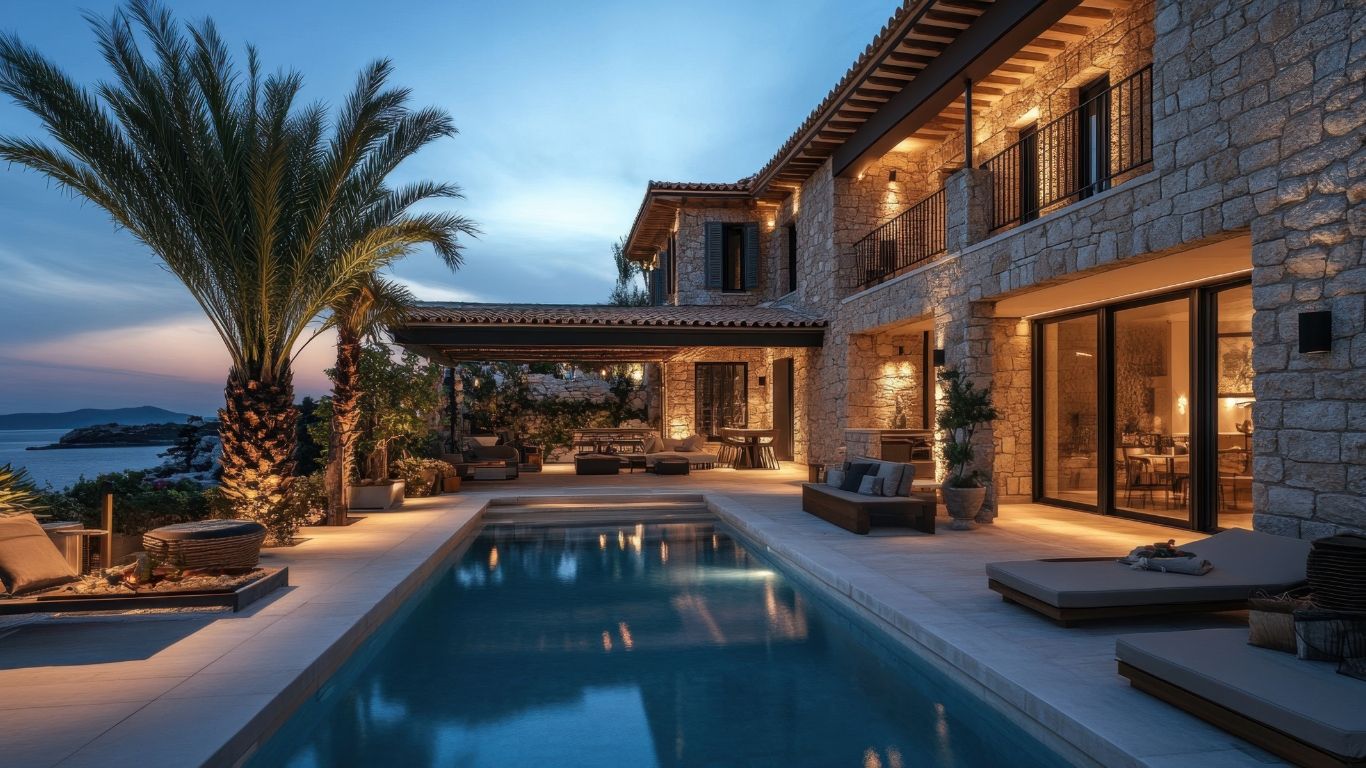
Greece’s Luxury Real Estate Just Joined The Mediterranean Elite
Greece’s luxury real estate market has quietly crossed a threshold that separates emerging opportunities from established powerhouses. The transformation isn’t subtle or speculative, but it’s quantifiable and documented through hard transaction data showing Greek properties now command prices comparable to the Mediterranean’s most prestigious destinations.
According to the new “Voices of Affluence” survey by Greece Sotheby’s International Realty, prime and super-prime housing across Greece has reached price parity with long-established luxury markets including Ibiza, Mallorca, Tuscany, and Dubai’s coastal zones.
What makes this moment particularly compelling for investors isn’t just the achievement of elite pricing but rather the combination of premium valuations with substantial growth runway. Despite reaching price parity with established markets, Greece’s luxury property sector generates only about €1 billion annually, representing merely 2% of the estimated €50 billion Mediterranean luxury real estate market.
Ultra-high-net-worth individuals from over thirty countries are increasingly viewing Greece as a first-choice destination rather than an alternative to more established markets.
Survey data shows that 63% of UHNWIs express intent to purchase property in Greece, with international buyers accounting for 67% of respondents led by the United States at 12%, the UK at 10%, France at 8%, and Germany at 7%. Greek domestic buyers make up the remaining 33%, demonstrating that this isn’t a story of local wealth recycling but rather genuine international capital inflows reshaping the market.

The UK Stock Market’s Concentration Problem Nobody’s Discussing
The headline numbers emerging from the UK stock market in 2025 initially appear reassuring to investors seeking evidence that value investing and diversification still work. The FTSE 100 has climbed roughly 20% year-to-date, putting it ahead of both the S&P 500 and Nasdaq when measured in sterling terms while trading at record highs.
Yet behind that strong index performance lurks a classic concentration problem where a very small group of sectors and individual stocks does almost all the heavy lifting while the broader market treads water.
During 2025, the FTSE 100 has outperformed the more domestically focused FTSE 250 by thirteen percentage points, a gap that initially suggests large-cap quality and international exposure are finally being rewarded after years of underperformance.
However, analysis by Panmure Liberum shows this gap gets almost entirely explained by just two sectors: banking and aerospace-defense. Strip those out, and the apparent large-cap renaissance largely evaporates, revealing what looks like broad-based recovery is actually a market whose fortunes hinge on a small cluster of cyclical winners benefiting from specific macroeconomic conditions.
At The Luxury Playbook, we don’t follow the market—we analyze it, decode it, and stay ahead of it.”