- The Luxury Playbook Weekly Round-up
- Posts
- Weekly Round-up

Agenda
Spotlight
Fine Assets
Real Estate
Equities

Which Alternative Assets Delivered The Best Returns In 2025?
The year 2025 did not just challenge investors. It pushed a large part of the market to rethink what “wealth preservation” actually means when equity volatility, political uncertainty, and inflation pressure all arrive at the same time.
Traditional portfolios built around stocks and bonds looked less predictable than they had in previous decades. As confidence in conventional allocation models weakened, sophisticated investors moved toward assets they could see, touch, and hold, turning alternative investments from a supporting role into a primary strategy.
Throughout the year, contested elections, policy surprises, and central bank interventions failed to create lasting calm. Even seasoned institutional investors started questioning whether the classic mix of equities and fixed income could still deliver attractive risk adjusted returns.
That shift in sentiment is what made 2025 feel like a turning point. Alternative assets were no longer about adding variety. They became a way to defend purchasing power and reduce exposure to rapid, sentiment driven drawdowns.

How Limited Edition Prints Deliver Liquidity Without Sacrificing Returns
The traditional art investment narrative celebrates illiquidity as a feature, not a bug.
Unique paintings and sculptures that take months to sell supposedly avoid the panic-driven crashes that plague liquid markets. Gallery owners will tell you this protective moat justifies the opacity and the waiting.
They’re not entirely wrong. But they’re conveniently ignoring the genuine barriers this creates for you as an investor seeking portfolio flexibility, rebalancing opportunities, or capital deployment when other opportunities arise.
Limited edition prints occupy a position that challenges this conventional wisdom entirely. These aren’t reproductions. They’re works created specifically in multiples by the artist, original status maintained, artistic authenticity intact.
Yet they offer market liquidity that approaches securities while delivering appreciation potential that rivals unique works. The combination sounds too good to be true until you examine how the mechanics actually work.
The prints market has evolved dramatically over the past five years. Exponential growth has been driven by collectors recognizing that multiplicity doesn’t diminish value when edition sizes obey scarcity principles. Small runs of 25 to 150 pieces create functional rarity while generating sufficient market activity to establish transparent pricing and enable efficient transactions. You’re not choosing between liquidity and returns. You’re accessing both simultaneously through deliberate edition sizing.
This represents a fundamental shift in how sophisticated collectors think about art allocation. The old model forced you to accept either blue chip unique works with all their illiquidity problems, or poster reproductions with zero investment merit.
Limited edition prints collapse that false choice. You can now acquire authentic works from established artists like Banksy, KAWS, or even historical figures like Warhol, benefit from transparent secondary markets, execute transactions in weeks rather than months, and still capture appreciation as the artist’s broader market expands.
The key is understanding what separates investment-grade prints from decorative reproductions.
Edition size matters. Artist involvement matters. Market structure matters.
When these elements align properly, you’re holding an asset that trades with the efficiency of a security but appreciates with the dynamics of fine art.

Will India and Mercosur Save French Wine From U.S. Market Collapse?
Global fine wine markets operate on a comfortable assumption: American consumer demand provides stable, predictable revenue streams. You produce premium French wine, Bordeaux, Burgundy, or Champagne, and wealthy U.S. buyers absorb it regardless of economic conditions.
This dependency has worked brilliantly for decades. It’s also created catastrophic vulnerability when geopolitical tensions, tariff threats, or policy shifts suddenly rewrite the rules of international trade.
As France’s third-largest contributor to trade surplus, the sector generated €14.3 billion ($17 billion) in exports during 2025. That seems robust until you examine the underlying structure.
Single-market exposure to the United States created conditions where a 21% collapse in one geography could devastate an entire national industry overnight.
This isn’t an imaginary scenario. It’s happening right now.
The question facing French wine producers isn’t whether American demand will recover. The question is whether India and Mercosur can replace that revenue before the industry contracts permanently.
The answer requires understanding both why the U.S. market collapsed so dramatically and whether emerging markets possess the structural capacity to absorb premium French wine at volumes and price points that actually matter.
Spoiler: the math doesn’t work the way French trade officials hope.

The Complete Tudor Black Bay 58 Buyer’s Guide
When Tudor launched its Black Bay revival in 2012, collectors praised the vintage aesthetics but immediately flagged a problem: the 41mm case wore too large for a tool watch inspired by 1950s proportions. Tudor listened.
Six years of engineering later, the brand delivered the Tudor Black Bay 58, a watch that would become one of the most sought-after dive watches at any price point.
The appeal is straightforward. You get comparable build quality to a Rolex Submariner, an in-house movement with superior power reserve, and design restraint that actually feels wearable.
Pricing is at the center of attention: $3,900 to $16,500 depending on your chosen variant, versus $9,000+ for an entry-level Submariner that you probably can’t buy at retail anyway. For purists who find modern Submariners too large, too expensive, or simply unavailable, the Black Bay 58’s 39mm case offers everything they actually wanted.
Since the 2018 debut, Tudor has expanded the line strategically. You now choose between black, navy blue, and burgundy red dials in steel. Beyond that sit the premium expressions: sterling silver 925 with its taupe dial, bronze that develops patina over time, and solid 18K gold with a green dial.
Each targets a different collector profile. The steel models on fabric straps start at $3,900, accessible luxury territory. The gold version reaches $16,500, a statement piece that still costs half what you’d pay for precious metal from the sister brand.
What makes the Tudor Black Bay 58 particularly compelling in today’s market is how it sidesteps the frustrations plaguing Rolex ownership. You walk into an authorized dealer and you can actually examine the watch. You might wait weeks or months rather than years.
You’re not navigating grey market premiums that double the retail price. This accessibility, combined with genuine horological merit, explains why the 58 has become the default recommendation for buyers seeking a serious dive watch without the Rolex circus.

Why Did U.S. Luxury Home Prices Suddenly Flatline In January 2026?
The luxury housing market has operated under different rules than mainstream real estate for decades. High-net-worth buyers pay cash. They’re insulated from interest rate fluctuations. They treat prime properties as strategic wealth preservation rather than leveraged speculation.
This exceptionalism has protected luxury segments through downturns that devastated middle-market housing. Yet even this rarified segment cannot escape fundamental market forces when multiple headwinds converge simultaneously.
Comparison with other markets reveals U.S. Luxury home prices’ underperformance.
Seoul luxury prices surged 14% in 2025, with forecasts projecting 6% to 8% growth for 2026. Tokyo expects 4% to 6% appreciation. Even Miami, recovering from a 6.4% decline, anticipates 2% to 4% gains.
Meanwhile, major U.S. luxury hubs like New York, Los Angeles, and San Francisco face 0% to 2% growth ceilings. This represents dramatic deceleration from historical norms where American luxury real estate commanded global premium pricing and delivered consistent mid-to-high single-digit appreciation.
You need to understand what “suddenly” actually means in luxury market terms. Price stagnation doesn’t occur overnight. It represents the culmination of inventory accumulation, affordability ceilings even at high-net-worth levels, $40 million price cuts on trophy properties signaling seller capitulation, and a psychological shift from fear-of-missing-out buying to disciplined waiting.
Wealth preservation has trumped speculative appreciation in buyer decision-making. This behavioral change matters more than any single economic indicator because it fundamentally alters transaction dynamics in ways that persist long after initial triggers subside.
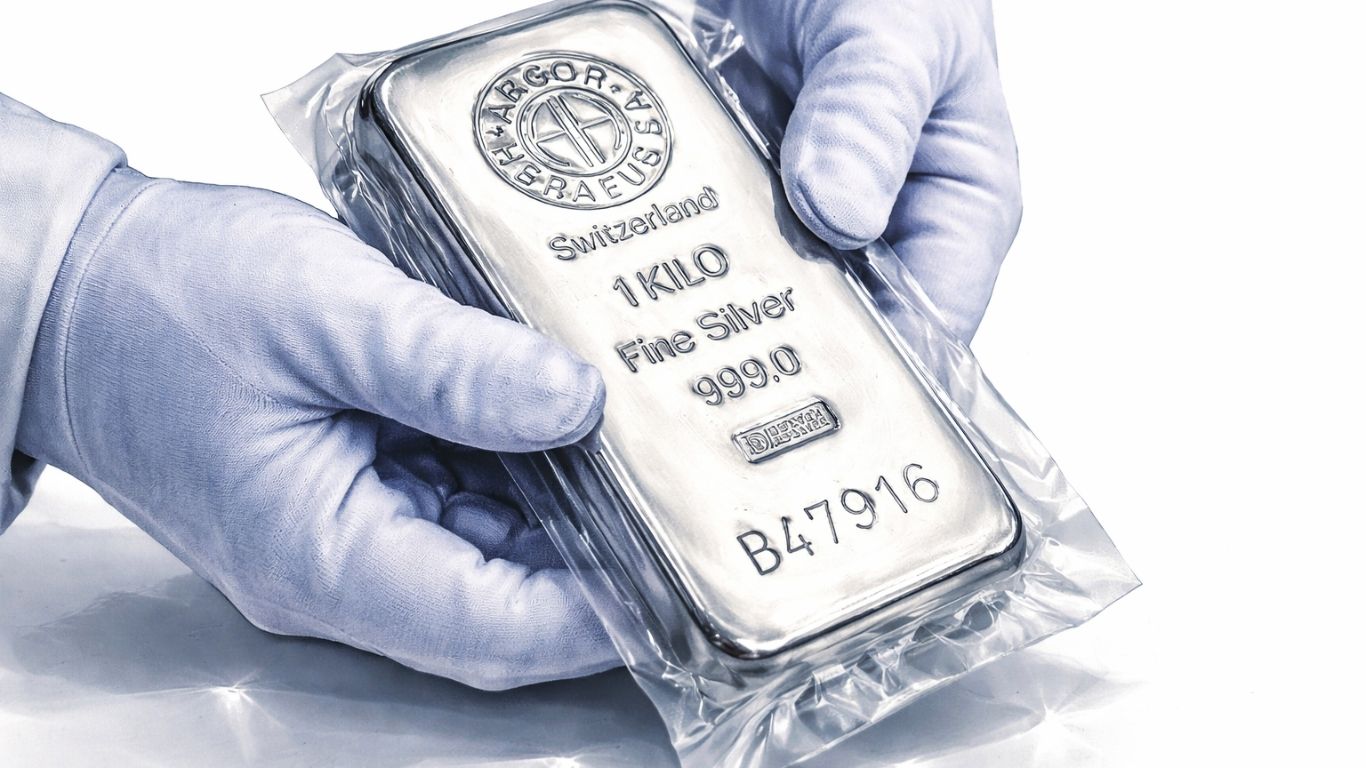
Why Did Silver Suffer Its Worst Crash Since 1980?
Precious metals occupy a paradoxical position in investment portfolios, simultaneously prized as safe haven assets that protect wealth during periods of market turbulence and financial system stress, yet capable of exhibiting volatility that rivals the most speculative growth stocks when leverage, momentum trading, and forced liquidation collide in perfect storm conditions.
This contradiction creates profound confusion among investors who allocate capital to gold and silver believing they are reducing portfolio risk, only to discover during crisis moments that these supposedly stable stores of value can crash with terrifying speed.
Silver functions simultaneously as an industrial commodity critical for electronics manufacturing, AI infrastructure buildout, solar panel production, and various clean energy applications, while also serving as a monetary metal attracting speculative capital from investors seeking inflation protection and alternatives to fiat currencies they view as debasing.
This creates a substantially smaller and thinner market than gold, where total global silver trading volumes represent perhaps one tenth of gold’s liquidity.
The size differential magnifies both upward rallies when momentum builds and downward crashes when sentiment reverses, transforming what should theoretically be a stable asset into one of the most volatile instruments in commodity markets.
The events of late January 2026 demonstrated with brutal clarity how quickly perceived “safety” can transform into catastrophic risk. Investors who believed they were protecting portfolios through precious metals allocation watched silver plunge from all-time highs to losses exceeding 40% in mere days, erasing gains that had taken months to accumulate and triggering margin calls that forced additional selling regardless of long term conviction.
At The Luxury Playbook, we don’t follow the market—we analyze it, decode it, and stay ahead of it.”